by Adam Hartung | Feb 9, 2014 | Current Affairs, Defend & Extend, Food and Drink, In the Swamp, Leadership, Lifecycle, Lock-in
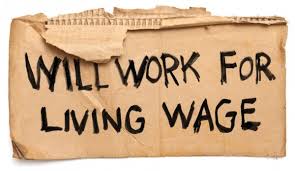
There is a definite trend to raising the minimum wage. Regardless your political beliefs, the pressure to increase the minimum wage keeps growing. The important question for business leaders is, “Are we prepared for a $12 or $15 minimum wage?”
President Obama began his push for raising the minimum wage above $10 a year ago in his 2013 State of the Union. Since then, several articles have been written on income inequality and raising the minimum wage. Although the case to raise it is not clear cut, there is no doubt it has increased the rhetoric against the top 1% of earners. And now the President is mandating an increase in the minimum wage for federal workers and contractors to $10.10/hour, despite lack of congressional support and flak from conservatives.
Whether the economic case is provable, it appears that public sentiment is greatly in favor of a much higher minimum wage. And it will not affect all companies the same. Those that depend upon low priced labor, such as retailers like Wal-Mart and fast food companies like McDonald’s have a much higher concern. As should their employees, suppliers and investors.
A recent Federal Reserve report took a specific look at what happens to fast food companies when the minimum wage goes up, such as happened in Illinois, California and New Jersey. And the results were interesting. Because they discovered that a higher minimum wage really did hurt McDonald’s, causing stores to close. But….. and this is a big but…. those closed stores were rapidly replaced by competitors that could pay the higher wages, leading to no loss of jobs (and an overall increase in pay for labor.)
The implications for businesses that use low-priced labor are clear. It is time to change the business model – to adapt for a different future. A higher minimum wage does not doom McDonald’s – but it will force the company to adapt. If McDonald’s (and Burger King, Wendy’s, Subway, Dominos, Pizza Hut, and others) doesn’t adapt the future will be very ugly for their customers and the company. But if these companies do adapt there is no reason the minimum wage will hurt them particularly hard.
The chains that replaced McDonald’s closed stores were Five Guys, Chick-fil-A and Chipotle. You might remember that in 1998 McDonald’s started investing in Chipotle, and by 2001 McDonald’s owned the chain. And Chipotle’s grew rapidly, from a handful of restaurants to over 500. But then in 2006 McDonald’s sold all its Chipotle stock as the company went IPO, and used the proceeds to invest in upgrading McDonald’s stores and streamlining the supply chain toward higher profits on the “core” business.
Now, McDonald’s is shrinking while Chipotle is growing. Bloomberg/BusinessWeek headlined “Chipotle: The One That Got Away From McDonalds” (Oct. 3, 2013.) Investors were well served to trade in McDonald’s stock for Chipotle’s. And franchisees have suffered through sales problems as they raised prices off the old “dollar menu” while suffering higher food costs creating shrinking margins. Meanwhile Chipotle’s franchisees have been able to charge more, while keeping customers very happy, and maintain margins while paying higher wages. In a nutshell, Chipotle’s (and similar competitors) has captured the lost McDonald’s business as trends favor their business.
So McDonald’s obviously made a mistake. But that does not mean “game over.” All McDonald’s, Burger King and Wendy’s need to do is adapt. Fighting the higher minimum wage will lead to a lot of grief. There is no doubt wages will go up. So the smart thing to do is figure out what these stores will look like when minimum wages double. What changes must happen to the menu, to the store look, to the brand image in order for the company to continue attracting customers profitably.
This will undoubtedly include changes to the existing brands. But, these companies also will benefit from revisiting the kind of strategy McDonald’s used in the 1990s when buying Chipotle’s. Namely, buying chains with a different brand and value proposition which can flourish in a higher wage economy. These old-line restaurants don’t have to forever remain dominated by the old brands, but rather can transition along with trends into companies with new brands and new products that are more desirable, and profitable, as trends change the game. Like The Limited did when selling its stores and converting into L Brands to remain a viable company.
Now is the time to take action. Waiting until forced to take action will be too late. If McDonald’s and its brethren (and Wal-Mart and its minimum-wage-paying retail brethren) remain locked-in to the old way of doing business, and do everything possible to defend-and-extend the old success formula, they will follow Howard Johnson’s, Bennigan’s, Circuit City, Sears and a plethora of other companies into brand, and profitability, failure. Fighting trends is a route to disaster.
However, by embracing the trend and taking action to be successful in a future scenario of higher labor these companies can be very successful. There is nothing which dictates they have to follow the road to irrelevance while smarter brands take their place. Rather, they need to begin extensive scenario planning, understand how these competitors succeed and take action to disrupt their old approach in order to create a new, more profitable business that will succeed.
Disruptions happen all the time. In the 1970s and 1980s gasoline prices skyrocketed, allowing offshore competitors to upend the locked-in Detroit companies that refused to adapt. On-line services allowed Google Maps to wipe out Rand-McNally, Travelocity to kill OAG and Wikipedia to kill bury Encyclopedia Britannica. These outcomes were not dictated by events. Rather, they reflect an inability of an existing leader to adapt to market changes. An inability to embrace disruptions killed the old competitors, while opening doors for new competitors which embraced the trend.
Now is the time to embrace a higher minimum wage. Every business will be impacted. Those who wait to see the impact will struggle. But those who embrace the trend, develop future scenarios that incorporate the trend and design new business opportunities can turn this disruption into a big win.
by Adam Hartung | Dec 19, 2013 | Current Affairs, Leadership
Everyone has a stake in America’s big, public corporations. Either as an investor, employee, customer, supplier or community leader. So how these corporations perform is a big deal for all of us.
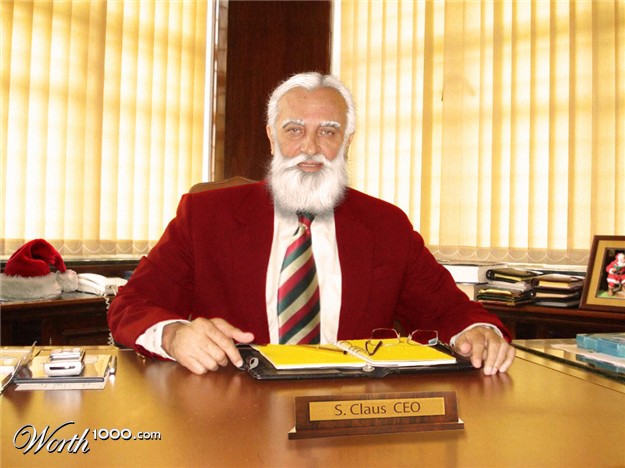
Unfortunately, we’ve had all too many corporations that have their problems. But, amazingly, we see little change in the CEO, or CEO compensation. When one of the USA‘s largest employers, McDonald’s, uses its hotline to tell low-paid employees they should avoid breaking open Christmas gift boxes, and instead return gifts for cash to buy gas and groceries, it’s not a bad idea to take a look at top executive pay. And with so many people still looking for work, and unemployment for people under 25 at something like 15%, there is an ongoing question as to whether CEOs are being held accountable or simply granted their jobs regardless of performance.
Given that Scrooge was a banker, why not start by looking at bank CEOs? And who better to glance at than the ultra-high profile Jamie Dimon, CEO and Chairman of JPMorganChase.
In 2012 Mr. Dimon told us there were really no problems in the JPMC derivatives business. We later learned that – oops – the unit did actually lose something like $6billion. Mr. Dimon was nice enough to admit this was more than a “templest in a teapot,” and eventually apoligized. He asked us to all realize that JPMC is really big, and mistakes will happen. Just forget about it and move on he recommended.
But in 2013 the regulators said “not so fast” and fined JPMC close to $1billion for failure to properly safeguard the public interest. The Board felt compelled to reflect on this misadventure and cut Mr. Dimon’s pay in half to a paltry $18.7million. That means in the year when things went $7billion wrong, he was paid nearly $37million – and the penalty was to subsequently receive only $19million. Thus his total compensation for 2 years, during which $7billion evaporated from the bank, was (roughly) $50M.
It appears unlikely anyone will be returning gifts to buy ham and beans in the Dimon household this year.
Mr. Dimon was spanked by the Board, and he is no longer the most highly paid CEO in the banking industry. That 2013 title goes to Wells Fargo CEO John Stumpf, who received about $23M. Wells Fargo is still sorting out the mess from all those bad mortgages which have left millions of Americans with foreclosures, bankruptcies, costly short-sales and mortgages greater than the home value. But, hotlines are now in place and things are getting better!
CEO compensation is interesting because it is all relative. Pay is minimally salary – never more than $1M (although that alone is a really big number to most people.) Bonuses make up most of the compensation,based on relative metrics tied to comparisons with industry peers. So, if an industry does badly and every company does poorly the CEOs still get paid their bonuses. You don’t have to be a Steve Jobs or Jeff Bezos with new insights, lots of growth, great products and margins to be paid a lot. Just don’t do a whole lot worse than some peer group you are compared against.
Which then brings us to the whole idea of why CEOs that make big mistakes – like the whopper at JPMC – so easily keep their jobs. Would a McDonald’s cashier that missed handing out change by $7 (1 one-billionth the JPMC mistake) likely be paid well – or fired? What about a JPMC bank teller? Yet, even when things go terribly wrong we rarely see a CEO lose their job.
During this shopping season, just look at Sears. Ed Lampert cut his pay to $1 in 2013. Hooray! But this did not help the company.
Sears and Kmart business is so bad CEO Lampert changed strategy in 2013 to selling profitable stores rather than more lawn mowers and hand tools in order to keep the company alive. Yet, as more employees leave, suppliers risk being repaid, communities lose their stores and retail jobs and tax base, Mr. Lampert remains Sears Holdings CEO. We accept that because he owns so much stock he has the “right” to remain CEO.
Perhaps Mr. Lampert deserves a visit from his own personal Jacob Marley, who might make him realize that there is more to life (and business) than counting cash flow and seeking lower cost financing options. Mr. Lampert can arise each morning before dawn to browbeat employees via conference webinars, and micromanage a losing business. But it leaves him sounding a lot like Scrooge. Meanwhile those behaviors have not stopped Sears and KMart from losing all market relevancy, and spiraling toward failure.
CEO pay-to-worker ratios have increased 1,000% since 1950. (How’s that for a “relative” metric?) Today the average CEO makes 200 times the company’s workforce (the top 100 make 300 times as much – and the CEO of Wal-Mart has a pension 6,182 times that of the average employee.) Is it any wonder so many investors, employees, customers, suppliers and community leaders are paying so much attention to CEO performance – and pay?
We are all thankful for the good CEO that develops long-range plans, spends time investing in growth projects, developing employees, increasing revenue and margins while expanding the communities in which the company lives and works. It just doesn’t happen often enough.
This Christmas, as many before, as we look at our portfolios, paychecks, pensions, product quality, service quality and communities too many of us wish far too often for better CEOs, and compensation really aligned with long-term performance for all constituencies.
by Adam Hartung | Jul 18, 2013 | Current Affairs, Defend & Extend, In the Whirlpool, Leadership, Lock-in
Sears has performed horribly since acquired by Fast Eddie Lampert's KMart in 2005. Revenues are down 25%, same store sales have declined persistently, store margins have eroded and the company has recently taken to reporting losses. There really hasn't been any good news for Sears since the acquisition.
Bloomberg Businessweek made a frontal assault on CEO Edward Lampert's leadership at Sears this week. Over several pages the article details how a "free market" organization installed by Mr. Lampert led to rampant internal warfare and an inability for the company to move forward effectively with programs to improve sales or profits. Meanwhile customer satisfaction has declined, and formerly valuable brands such as Kenmore and Craftsman have become industry also-rans.
Because the Lampert controlled hedge fund ESL Investments is the largest investor in Sears, Mr. Lampert has no risk of being fired. Even if Nobel winner Paul Krugman blasts away at him. But, if performance has been so bad – for so long – why does the embattled Mr. Lampert continue to lead in the same way? Why doesn't he "fire" himself?
By all accounts Mr. Lampert is a very smart man. Yale summa cum laude and Phi Beta Kappa, he was a protege of former Treasury Secretay Robert Rubin at Goldman Sach before convincing billionaire Richard Rainwater to fund his start-up hedge fund – and quickly make himself the wealthiest citizen in Connecticut.
If the problems at Sears are so obvious to investors, industry analysts, economics professors, management gurus and journalists why doesn't he simply change?
Mr. Lampert, largely because of his success, is a victim of BIAS. Deep within his decision making are his closely held Beliefs, Interpretations, Assumptions and Strategies. These were created during his formative years in college and business. This BIAS was part of what drove his early success in Goldman, and ESL. This BIAS is now part of his success formula – an entire set of deeply held convictions about what works, and what doesn't, that are not addressed, discussed or even considered when Mr. Lampert and his team grind away daily trying to "fix" declining Sears Holdings.
This BIAS is so strong that not even failure challenges them. Mr. Lampert believes there is deep value in conventional retail, and real estate. He believes strongly in using "free market competition" to allocate resources. He believes in himself, and he believes he is adding value, even if nobody else can see it.
Mr. Lampert assumes that if he allows his managers to fight for resources, the best programs will reach the top (him) for resourcing. He assumes that the historical value in Sears and its house brands will remain, and he merely needs to unleash that value to a free market system for it to be captured. He assumes that because revenues remain around $35B Sears is not irrelevant to the retail landscape, and the company will be revitalized if just the right ideas bubble up from management.
Mr. Lampert inteprets the results very different from analysts. Where outsiders complain about revenue reductions overall and same store, he interprets this as an acceptable part of streamlining. When outsiders say that store closings and reduced labor hurt the brand, he interprets this as value-added cost savings. When losses appear as a result of downsizing he interprets this as short-term accounting that will not matter long-term. While most investors and analysts fret about the overall decline in sales and brands Mr. Lampert interprets growing sales of a small integrated retail program as a success that can turn around the sinking behemoth.
Mr. Lampert's strategy is to identify "deep value" and then tenaciously cut costs, including micro-managing senior staff with daily calls. He believes this worked for Warren Buffett, so he believes it will continue to be a successful strategy. Whether such deep value continues to exist – especially in conventional retail – can be challenged by outsiders (don't forget Buffett lost money on Pier 1,) but it is part of his core strategy and will not be challenged. Whether cost cutting does more harm than good is an unchallenged strategy. Whether micro-managing staff eats up precious resources and leads to unproductive behavior is a leadership strategy that will not change. Hiring younger employees, who resemble Mr. Lampert in quick thinking and intellect (if not industry knowledge or proven leadership skills) is a strategy that will be applied even as the revolving door at headquarters spins.
The retail market has changed dramatically, and incredibly quickly. Advances in internet shopping, technology for on-line shopping (from mobile devices to mobile payments) and rapid delivery have forever altered the economics of retailing. Customer ease of showrooming, and desire to shop remotely means conventional retail has shrunk, and will continue to shrink for several years. This means the real challenge for Sears is not to be a better Sears as it was in 2000 — but to become something very different that can compete with both WalMart and Amazon – and consumer goods manufacturers like GE (appliances) and Exide (car batteries.)
There is no doubt Mr. Lampert is a very smart person. He has made a fortune. But, he and Sears are a victim of his BIAS. Poor results, bad magazine articles and even customer complaints are no match for the BIAS so firmly underlying early success. Even though the market has changed, Mr. Lampert's BIAS has him (and his company) in internal turmoil, year after year, even though long ago outsiders gave up on expecting a better result.
Even if Sears Holdings someday finds itself in bankruptcy court, expect Mr. Lampert to interpret this as something other than a failure – as he defends his BIAS better than he defends its shareholders, employees, suppliers and customers.
What is your BIAS? Are you managing for the needs of changing markets, or working hard to defend doing more of what worked in a bygone era? As a leader, are you targeting the future, or trying to recapture the past? Have market shifts made your beliefs outdated, your interpretations of what happens around you faulty, your assumptions inaccurate and your strategies hurting results? If any of this is true, it may be time you address (and change) your BIAS, rather than continuing to invest in more of the same. Or you may well end up like Sears.
by Adam Hartung | Apr 22, 2013 | Current Affairs, Defend & Extend, In the Swamp, In the Whirlpool, Leadership
JCPenney's board fired the company CEO 18 months ago. Frustrated with weak performance, they replaced him with the most famous person in retail at the time. Ron Johnson was running Apple's stores, which had the highest profit per square foot of any retail chain in America. Sure he would bring the Midas touch to JC Penney they gave him a $50M sign-on bonus and complete latitude to do as he wished.
Things didn't work out so well. Sales fell some 25%. The stock dropped 50%. So about 2 weeks ago the Board fired Ron Johnson.
The first mistake: Ron Johnson didn't try solving the real problem at JC Penney. He spent lavishly trying to remake the brand. He modernized the logo, upped the TV ad spend, spruced up stores and implemented a more consistent pricing strategy. But that all was designed to help JC Penney compete in traditional brick-and-mortar retail. Against traditional companies like Wal-Mart, Kohl's, Sears, etc. But that wasn't (and isn't) JC Penney's problem.
The problem in all of traditional retail is the growth of on-line. In a small margin business with high fixed costs, like traditional retail, even a small revenue loss has a big impact on net profit. For every 5% revenue decline 50-90% of that lost cash comes directly off the bottom line – because costs don't fall with revenues. And these days every quarter – every month – more and more customers are buying more and more stuff from Amazon.com and its on-line brethren rather than brick and mortar stores. It is these lost revenues that are destroying revenues and profits at Sears and JC Penney, and stagnating nearly everyone else including Wal-Mart.
Coming from the tech world, you would have expected CEO Johnson to recognize this problem and radically change the strategy, rather than messing with tactics. He should have looked to close stores to lower fixed costs, developed a powerful on-line presence and marketed hard to grab more customers showrooming or shopping from home. He should have targeted to grow JCP on-line, stealing revenues from other traditional retailers, while making the company more of a hybrid retailer that profitably met customer needs in stores, or on-line, as suits them. He should have used on-line retail to take customers from locked-in competitors unable to deal with "cannibalization."
No wonder the results tanked, and CEO Johnson was fired. Doing more of the tired, old strategies in a shifting market never works. In Apple parlance, he needed to be focused on an iPad strategy, when instead he kept trying to sell more Macs.
But now the Board has made its second mistake. Bringing back the old CEO, Myron Ullman, has deepened JP Penney's lock-in to that old, traditional and uncompetitve brick-and-mortar strategy. He intends to return to JCP's legacy, buy more newspaper coupons, and keep doing more of the same. While hoping for a better outcome.
What was that old description of insanity? Something about repeating yourself…..
Expectedly, Penney's stock dropped another 10% after announcing the old CEO would return. Investors are smart enough to recognize the retail market has shifted. That newsapaper coupons, circulars and traditional advertising is not enough to compete with on-line merchants which have lower fixed costs, faster inventory turns and wider product selection.
It certainly appears Mr. Johnson was not the right person to grow JC Penney. All the more reason JCP needs to accelerate its strategy toward the on-line retail trend. Going backward will only worsen an already terrible situation.
by Adam Hartung | Mar 1, 2013 | Current Affairs, In the Swamp, Leadership, Web/Tech
Marissa Mayer created a firestorm this week by issuing an email requiring all employees who work from home to begin daily commuting to Yahoo offices. Some folks are saying this is going to be a blow to long-term employees, hamper productivity and will harm the company. Others are saying this will improve communications and cooperation, thin out unproductive employees and help Yahoo.
While there are arguments to be made on both sides, the issue is far simpler than many people make it out to be – and the implications for shareholders are downright scary.
Yahoo has been a strugging company for several years. And the reason has nothing to do with its work from home policy. Yahoo has lacked an effective strategy for a decade – and changing its work from home policy does nothing to fix that problem.
In the late 1990s almost every computer browser had Yahoo as its home page. But Yahoo long ago lost its leadership position in content aggregation, search and ad placement. Now, Yahoo is irrelevant. It has no technology advantage, no product advantage and no market advantage. It is so weak in all markets that its only value has been as a second competitor that keeps the market leader from being attacked as a monopolist!
A series of CEOs have been unable to develop a new strategy for Yahoo to make it more like Amazon or Apple and less like – well, Yahoo. With much fanfare Ms. Mayer was brought into the flailing company from Google, which is a market leader, to turn around Yahoo. Only she's been on the job 7 months, and there still is no apparent strategy to return Yahoo to greatness.
Instead, Ms. Mayer has delivered to investors a series of tactical decisions, such as changing the home page layout and now the work from home policy. If tactical decisions alone could fix Yahoo Carol Bartz would have been a hero – instead of being pushed out by the Board in disgrace.
Many leading pundits are enthused with CEO Mayer's decision to force all employees into offices. They are saying she is "making the tough decisions" to "cut the corporate cost structure" and "push people to be more productive." Underlying this lies thinking that the employees are lazy and to blame for Yahoo's failure.
Balderdash. It's not employees' fault Yahoo, and Ms. Mayer, lack an effective strategy to earn a high return on their efforts.
It isn't hard for a new CEO to change policies that make it harder for people to do their jobs – by cutting hours out of their day via commuting. Or lowering productivity as they are forced into endless meetings that "enhance communication and cooperation." Or forcing them out of the company entirely with arcane work rules in a misguided effort to lower operating costs or overhead. Any strategy-free CEO can do those sorts of things.
Just look at how effective this approach was for
- "Chainsaw" Al Dunlap at Scott Paper
- "Fast Eddie" Lampert at Sears
- Carol Bartz at Yahoo
- Meg Whitman at HP
- Brian Dunn at Best Buy
- Gregory Rayburn at Hostess
- Antonio Perez at Kodak
The the fact that some Yahoo employees work from home has nothing to do with the lack of strategy, innovation and growth at Yahoo. That failure is due to leadership. Bringing these employees into offices will only hurt morale, increase real estate costs and push out several valuable workers who have been diligently keeping afloat a severely damaged Yahoo ship. These employees, whether in an office or working at home, will not create a new strategy for Yahoo. And bringing them into offices will not improve the strategy development or innovation processes.
Regardless of anyone's personal opinions about working from home, it has been the trend for over a decade. Work has changed dramatically the last 30 years, and increasingly productivity relies on having time, alone, to think and produce charts, graphs, documents, lines of code, letters, etc. Technologies, from PCs to mobile devices and the software used on them (including communications applications like WebEx, Skype and other conferencing tools) make it possible for people to be as productive remotely as in person. Usually more productive removed from interruptions.
Taking advantage of this trend helps any company to hire better, and be more productive. Going against this trend is simply foolish – regardless the intellectual arguments made to support such a decision. Apple fought the trend to PCs and almost failed. When it wholesale adopted the trend to mobile, seriously reducing its commitment to PC markets, Apple flourished. It is ALWAYS easier to succeed when you work with, and augment trends. Fighting trends ALWAYS fails.
Yahoo investors have plenty to be worried about. Yahoo doesn't need a "tough" CEO. Yahoo needs a CEO with the insight to create, and implement, a new strategy. And a series of tactical actions do not sum to a new strategy. As importantly, the new strategy – and its implementation – needs to augment trends. Not go against trends while demonstrating the clout of a new CEO.
If you've been waiting to figure out if Ms. Mayer is the CEO that can make Yahoo a great company again, the answer is becoming clear. She increasingly appears very unlikely to have what it takes.