The NFL Has A Bigger Problem Than Kneeling Employees – Demographics and Trends

The NFL Has A Bigger Problem Than Kneeling Employees – Demographics and Trends

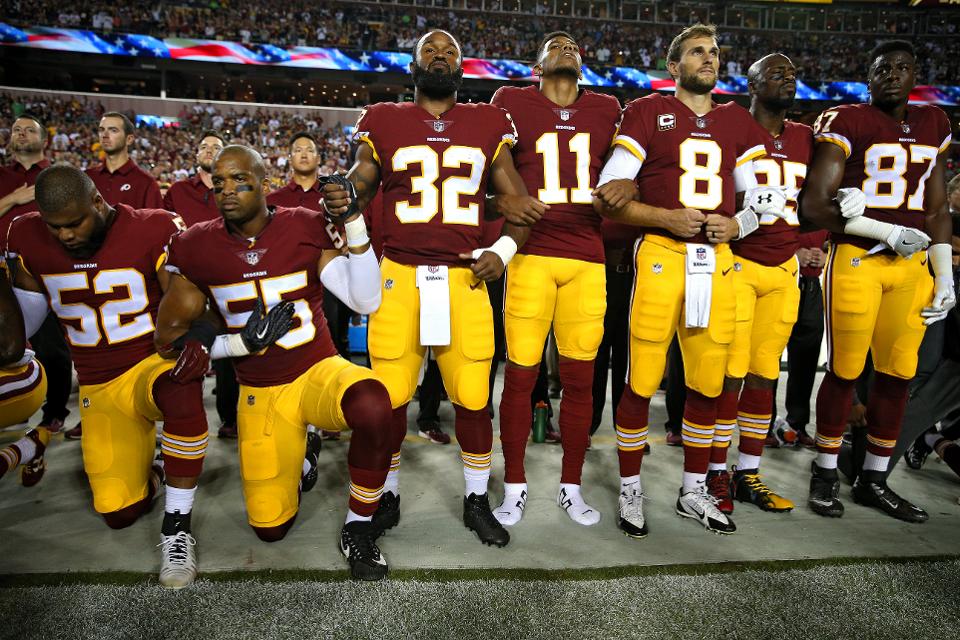
LANDOVER, MD – SEPTEMBER 24: Washington Redskins players link arms during the national anthem before their game against the Oakland Raiders at FedExField on September 24, 2017 in Landover, Maryland. (Photo by Patrick Smith/Getty Images)

A recent top news story has been NFL players kneeling during the national anthem.  The controversy was amplified when President Trump weighed in with objections to this behavior, and his recommendation that the NFL pass a rule disallowing it.  This kind of controversy doesn’t make life easier for NFL leaders, but it really isn’t their biggest problem.  Ratings didn’t start dropping recently, viewership has been declining since 2015.

NFL ratings stalled in 2015

NFL viewership had a pretty steady climb through 2014.  But in 2015 ratings leveled.  Then in 2016 viewership fell a whopping 9%.  During the first 6 weeks of the 2016 regular season (into early October)viewership was down 11%.  Through the first 9 weeks of 2016 ratings were down 14% before things finally leveled off.  Although nobody had a clear explanation why viewership declined so markedly, there was widespread agreement that 2016 was a ratings crash for the league.  Fox had its worst NFL viewership since 2008, and ESPN had its worst since 2005.
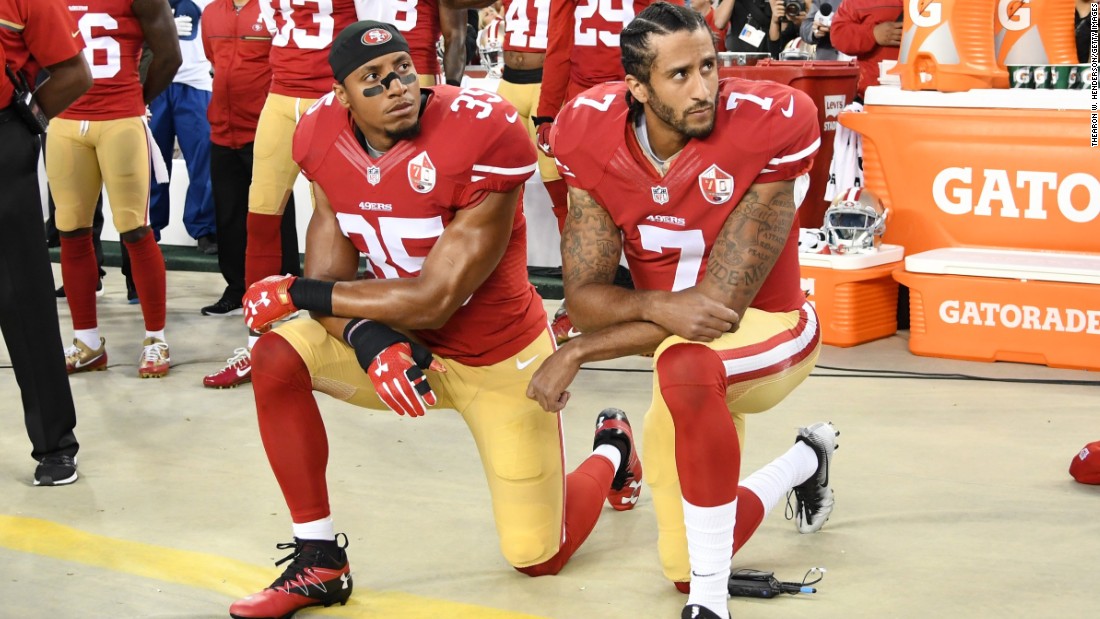
Colin Kaepernick kneels 2016, CNN photo

Interestingly, later analysis showed that overall people were watching 5% more games.  But they were watching less of each game.  In other words, fans had become more casual about their viewership.  People were watching less TV, watching less cable, and that included live sports.  And those who stream games almost never streamed the entire game.

And this behavior change wasn’t limited to the NFL.  As reported at Politifact.com, Paulsen, editor in chief of Sports Media Watch said, “it’s really important to note the NFL is not declining while other leagues are increasing.  NASCAR ratings are in the cellar right now.  The NBA had some of its lowest rated games ever on network television last year… It’s an industry-wide phenomenon and the NFL isn’t immune to it anymore.”  So the declining viewership problem is widespread, and much older than the recent national anthem controversy.

Live sports is not attracting new, younger viewers

Magna Global recently released its 2017 U.S. Sports Report.  According to Radio + Television Business Report (RBR.com) the age of live sports viewers is scewing older.  Much older.  Today the average NFL viewer is at least 50.  Similar to tennis, and college basketball and football.  That’s second only to baseball at 57 – which was 50 as recently as 2000.  But no sport is immune. NHL viewers are now typically 49.  They were 33 in 2000.  As simple arithmetic shows, the same folks are watching hockey but few new viewers are being attracted.  Based on recent trends, Magna projects viewership for the Sochi Olympics and 2018 World Cup will both decline.

I’ve written before about the importance of studying demographic trends when planning.  These trends are highly reliable, even if boring.  And they provide a lot of insight.  In the case of live sports watching, younger people simply don’t sit down and watch a complete game.  Younger people have different behaviors.  They watch an entire season of shows in one day.  They multi-task, doing many things at once.  And they prefer information in short bursts – like weekly blogs rather than a book.  And they are more interested in outcomes, the final result, than watching how it happened.  Where older people watch a game play-by-play, younger people simply want to know the major events and the final score.

To understand what’s happening with NFL ratings we really don’t have to look much further than simple demographics — the aging of the U.S. population — and the change in viewing behavior from older groups to younger groups.

Unfortunately, according to a recent CNN poll, while 56% of people under age 45 think the recent demonstrations are the right thing to do, 59% of those over 45 say the demonstrations are wrong.  In its “core” NFL viewership folks don’t like the kneeling, so it would appear the NFL should heed the President’s advice. But, looking down the road, the NFL won’t succeed unless it finds a way to attract a younger audience.  With younger people approving the demonstrations NFL leadership risks throwing the baby out with the bathwater if they knee-jerk control player behavior.

Understanding customer demographic trends, and adapting, is crucial to success

The demonstrations are interesting as an expression of American ideals.  And they are gathering a lot of discussion.  But they are not what’s plaguing NFL viewership.  Today the NFL has a much bigger task of making changes to attract young people as viewers.  Should leaders shorten the game’s length?  Should they change rules to increase scoring and create more excitement during the game?  Should they invest in more apps to engage viewers in play-by-play activity?  Should they seek out ways to allow more gambling during the game?  Whatever leadership does, the traditions of the NFL need to be tested and altered in order to attract new people to watching the game if they want to preserve the advertising dollars that make it a success.

When your business falters, do you look at long-term trends, or react to a short-term event?  It’s easy for politicians and newscasters to focus on the short-term, creating headlines and controversy.  But business leaders have an obligation to look much deeper, and longer term.  It is critical we move beyond “that’s the way the game is played” to looking at how the game may need to change in order to remain relevant and engage new customers.

Note how boxing recently brought in a mixed martial arts fighter to take on the world champion.  The outcome was nearly a foregone conclusion, but nobody cared because it brought in people to a boxing match that otherwise would not have been there.  If you don’t recognize demographic shifts, and take actions to meet emerging trends you risk becoming as left behind as cricket, badminton, horseshoes, bocce ball and darts.

I'd like to receive newsletters.


Colbert Beat Fallon By Following Trends, Which Will Make CBS More Money

Colbert Beat Fallon By Following Trends, Which Will Make CBS More Money

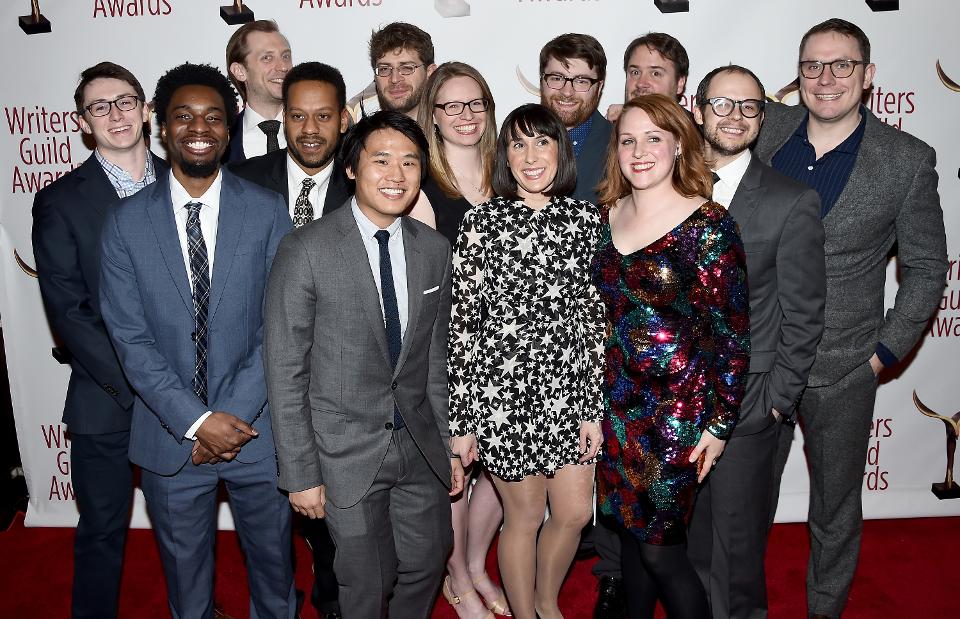
Photo: NEW YORK, NY – FEBRUARY 19: Writers and crew of ‘The Late Show with Stephen Colbert’ attend 69th Writers Guild Awards New York Ceremony at Edison Ballroom on February 19, 2017 in New York City. (Photo by Nicholas Hunt/Getty Images)

The Late Show hosted by Stephen Colbert is now the #1 program in late night television.  This come-from-far-behind change in market leadership, overtaking The Tonight Show hosted by Jimmy Fallon, is not about politics.  It is about understanding trends and using them to create value.

Back in February, 2014 there was real concern about the future of late night television.  Audiences had peaked decades before, when Nightline was huge and competed with The Tonight Show hosted by legend Johnny Carson. By 2014 many wondered if American programming after the late news was all shifting to cable TV as audiences continued shrinking.  Producers replaced Jay Leno with Jimmy Fallon in order to revitalize viewers.  Jimmy Kimmel was moved up in time as ABC killed Nightline, hoping he could carve out a growing niche.  And David Letterman, late night’s senior statesman, was about to be replaced by cable satirist Stephen Colbert.  But these changes gathered little industry interest, because the time slots simply were not doing well for broadcasters – or advertisers.

Fallon maintained a dominant lead in the time slot as Colbert’s first year was a yawner.

As TheWrap.com reported in September, 2016, despite the fanfare of Colbert taking over hosting, he “posed no threat whatsoever to Jimmy Fallon.”  Fallon’s show maintained a huge lead. With 3.65 million viewers it bested The Late Show by over 800,000.  Colbert, with 2.82 million viewers seemed mostly trying to keep a lead over Kimmel’s 2.3 million viewers.
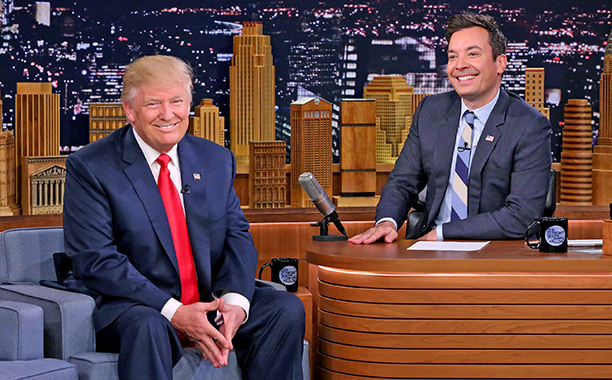
But, as the New York Times headlined on May 17, 2017 “Jimmy Fallon Was On Top of the World. Then Came Trump.”  During 2016 viewers were engaged in the knock-down-drag-out political battle for the Presidency.  In an effort to build on political interest, Fallon’s producers invited Donald Trump on the show.  Unfortunately, most people viewed Mr. Fallon’s interview as fluff, and given the heat of the rhetoric the critics tore into Fallon hard for an interview that fell far short of its possibilities.  Some considered it a turning point, an interview from which Fallon has yet to recover his full audience following.
jimmy fallon inteviews trump 2016 Getty
ANDREW LIPOVSKY/NBC/NBCU PHOTO BANK VIA GETTY IMAGES

Meanwhile the producers at The Late Show kept their eyes on the mood of the electorate.

They had largely let Colbert promote Democrat Clinton, and even though she lost the election noted she had won the popular vote.  As Colbert continued to criticize the President, his audience grew.  Soon, Colbert was beating Fallon in total audience – something nobody predicted just a few months earlier.  It was quite a surprise when the 2016-2017 September to May season drew to a close and it was discovered that Colbert actually won the time slot, producing a larger total audience than Fallon.  It was only about 20,000 – but it was a win few saw coming.

The Late Show writers and producers noted the historic and growing unpopularity of President Trump, and the public interest in ongoing investigations, and built the headlines into the show.  Variety headlined on 7/25/17 “Stephen Colbert’s Russia Week Lofts Late Show to Biggest Weekly Win Ever.”  Using audience trends The Late Showdevoted a week to a comical look at Russia, which saw it generate a 2.87million total audience in comparison to The Tonight Show‘s 2.42million – a beat of a whopping 450,000 viewers.

late show hillary 2017 CBS
Photo: CBS
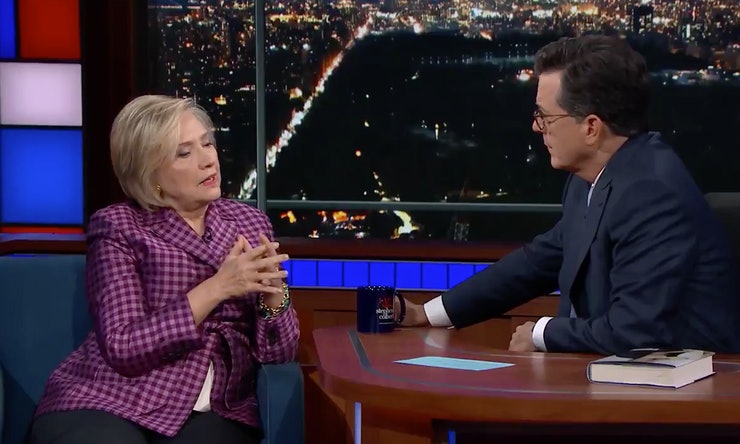
Continuing to evaluate what interested the public, producers brought on losing candidate Hillary Clinton, long supported by the show, to create Colbert’s largest audience since launch.  The next night they brought on President Trump’s former Communications Director, Republican and Trump supporter Anthony Scaramucci, to an even bigger audience.  By August 4 Colbert bested Fallon by 900,000 viewers for its biggest weekly win ever, and Colbert was clearly the summer winner with an audience growing at 11% while competitors were losing viewers.

All of this is very good news for CBS.

NBC (NBC/Universal is a division of Comcast) is not losing money on The Tonight Show.  And in the desirable segment of those age 18-49 Fallon still has the largest audience.  But, it is a good thing for CBS to have so many new viewers.  It brings in more advertisers, and higher revenues for each ad.   This leads to more profits.

One might say that this is all about the hosts, and their political leanings.  Maybe the content is driven by host opinions.  But CBS is winning viewers because it is following trends, and matching its programming to trends.  This is growing its late night audience, while NBC’s is shrinking.

Steve Burke, chief executive of NBC Universal was quoted in the New York Times saying “I think the answer is for Jimmy to be Jimmy.”  Sounds like what a father might say about his son when the boy finds himself in a rough patch.  But I’m not so sure its the position a company CEO should take regarding a very expensive employee in the lead of a major project.

Maybe NBC’s producers should spend more time looking at trends, and figuring out how to program content that will improve The Tonight Show‘s competitiveness.  The show was upended in just one year.  What will total audience look like next May when the 2017-2018 season ends?  Will revenues and profits be unaffected if NBC’s audience keeps falling while CBS’s keeps growing?

For the rest of us, the lesson should be clear.  Nobody is relegated to always being #2.  Regardless the leader’s size, if you study trends and figure out how to leverage them you can grow, and you can become #1.

 Understanding trends and applying them to your business is the best way to invigorate growth and improve your competitiveness.

I'd like to receive newsletters.
Toys R Us – How Bad Assumptions Fed Bad Financial Planning Creating Failure

Toys R Us – How Bad Assumptions Fed Bad Financial Planning Creating Failure

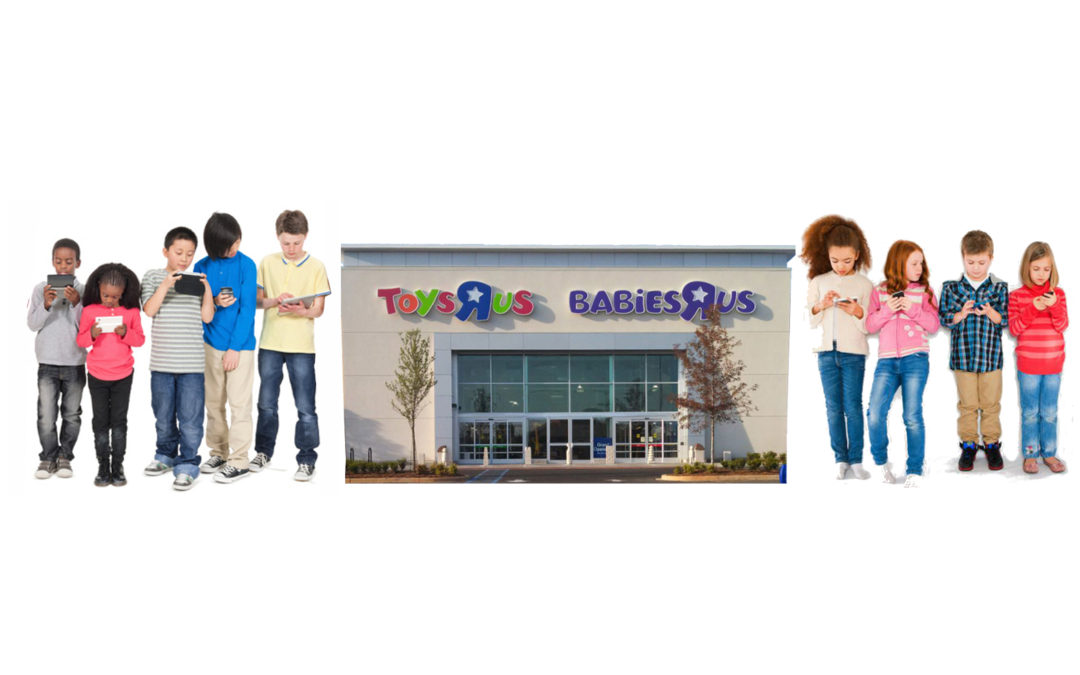
Toys R Us filed for bankruptcy this week.  And the obvious response was “another retailer slaughtered by Amazon and on-line retailing.”  But this conclusion comes short of describing why Toys R Us leadership did not do the obvious things to keep Toys R Us relevant.

toy retailing sales in us from statista

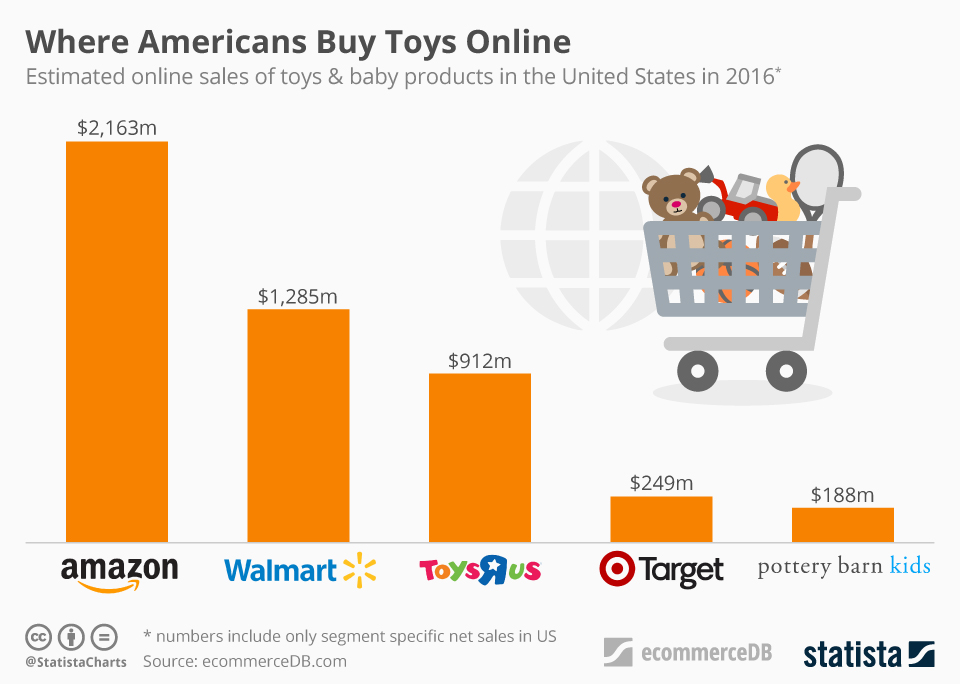
Amazon and WalMart both eclipsed Toys R Us in toy retail sales.
Chart courtesy of Felix Richter, Statista

Everyone, and I mean everyone, knew over the last decade that customers were buying more stuff on-line, including toys. And everyone also knew that WalMart was pushing extremely hard to keep customers going to their stores by offering products like toys at low prices.  And, it was clear that customers were shifting to buying more toys from both these retailers.  If this was so obvious to everyone, why didn’t Toys R Us leadership do something?  After all, Toys R Us is a multi-billion dollar revenue company.

The LBO

It was over 30 years ago when financiers discovered they could buy a company, sell off some assets and otherwise increase the company’s cash, then convince banks and bondholders to load the company with debt.  These financiers would then pull out the cash for themselves, and leave the company with a ton of debt.  The LBO (leveraged buy out) was born, invented by investment bankers like KKR (named for founders Kohlberg, Kravis & Roberts.) They would use a small bit of private equity, and then use the company’s own assets to raise debt money (leverage) to buy the company.  By “restructuring” the company to a lower cost of operations, usually with draconian reductions, they would increase cash flow to make higher debt repayments.  Then they would either take the money out directly, or take the company public where they could sell their shares, and make themselves rich.  This form of deal making birthed what we now call the Private Equity business.

In 2005, KKR and Bain Capital (which included former Presidential candidate Mitt Romney) bought Toys R Us for about $6.6billion, plus assuming just under $1B of debt, for a total valuation of $7.5billion.  But the private equity  guys didn’t buy the company with equity.  They only put in $1.3billion, and used the company’s assets to raise $5.3billion in additional debt, making total debt a whopping $6.2B.  Total debt was now a remarkable 82.7% of total capital!  At the time of the deal interest rates on that debt were around 7.25%, creating a cash outflow of $450million/year just to pay interest on the loans.  At the time Toys R Us was barely making a profit of 2% – so the debt was double company net profits.

KKR and Bain buy Toys R Us logos

Debt led to bad management decisions and ultimately bankruptcy of the U.S. company

The biggest assumption behind a debt-financed takeover is that the company can cut costs to improve cash flow and thus pay the interest.  But behind that assumption is an even bigger assumption.  That the marketplace won’t change dramatically.  The KKR and Bain Capital leaders assumed they could shrink Toys R Us in a way that would lower operating costs.  They also assumed they could sell some under-utilized assets to raise cash.  They did not assume they would need contingency money if competition, and the marketplace, changed in some unplanned way.

eCommerce was pretty new in 2005.  Amazon was an $8.5 billion company, but it didn’t make any profits and very few predicted then it would become today’s $100 billion behemoth.  Because the financiers didn’t anticipate a big market shift to ecommerce, they focused on the war with Walmart and Target.  Their plans were to lower operating costs, close some stores that were underperforming, license some offshore stores, and sell some assets (like real estate owned or leases) to raise cash and repay the debt.

amazon.com toy car screen shot

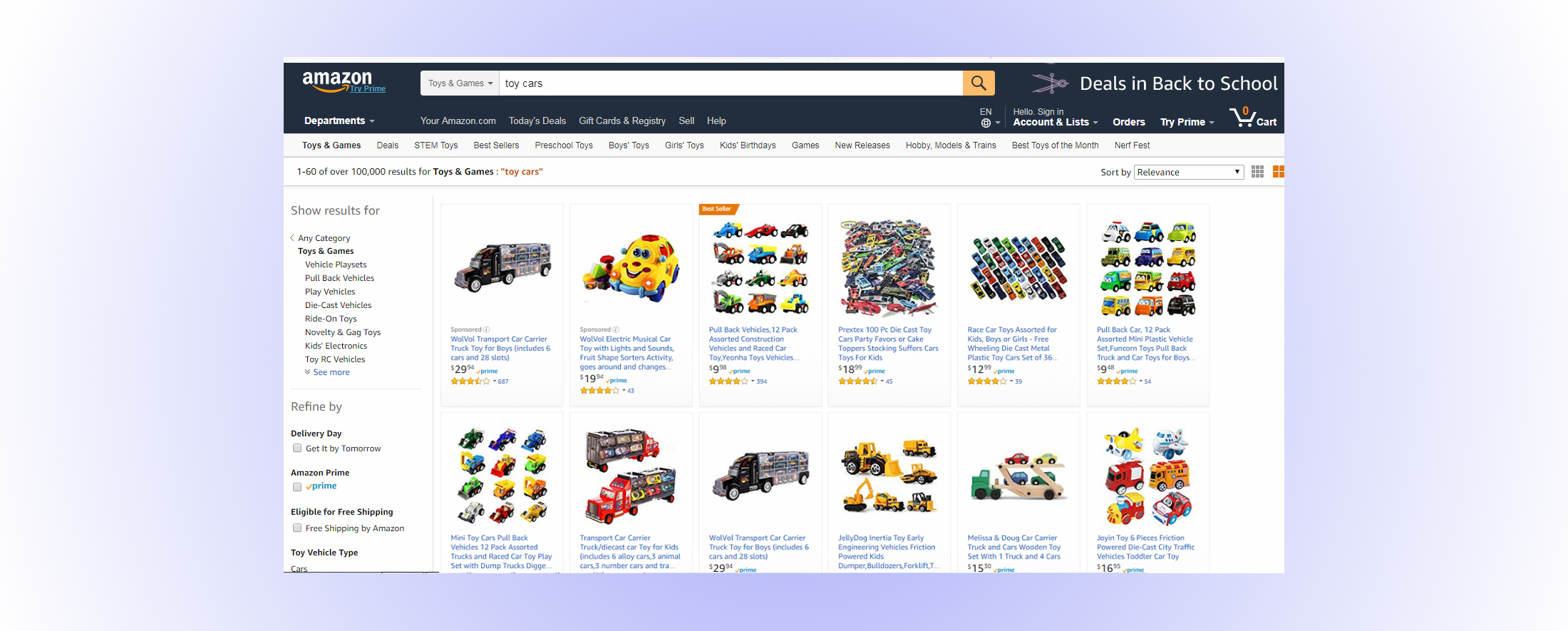
But they weren’t prepared to take on another, entirely different competitor on-line.  As Amazon’s growth affected all retailers, Toys R Us simply did not have the resources to fight the traditional discount and dollar brick-and-mortar retailers, and build a major on-line presence, and keep paying that debt. While it is easy to sit on the sidelines and say that Toys R Us should have spent more money building its on-line presence in order to remain relevant, the fact is that the deal in 2005 left the company with insufficient cash flow to do so.  Regardless of what leadership might have wanted to do, simply keeping the lights on was a tough challenge when having to pay out so much cash to bondholders.

And the investors simply did not expect that the growth of on-line retailing would stall traditional retail stores, thus creating a major loss of value for retail real estate.  U.S. retail real estate value had increased in value for decades.  The assumption was that the real estate, whether owned or leased, would continue to go up in value.  Real estate was a “hard” asset that KKR and Bain Capital could bank on for raising cash to repay the debt.  But as on-line retail grew, and traditional retail declined, America became “over stored” with far too much retail space.  Prices were shattered in many markets, and it was not possible for Toys R Us to sell those assets for a gain that would meet the debt obligations.

With $400 million of debt coming due next year, Toys R Us simply doesn’t have the cash flow, or assets, to repay those bondholders

Old assumptions about finance are a big problem for companies today.  Assumptions about “leveraging” hard assets, and intangibles like brand value, are no longer true.  Competitors emerge, markets change, and old assets can lose value very fast.  Assumptions about business model stability are no longer true, as new competitors using newer technology create new ways to sell, and often at lower cost than was ever expected.  Assumptions about customer loyalty, and market share stability, are no longer true as new competitors appeal to customers differently and cause big shifts in buying behavior very fast.  The speed with which technology, competitors, markets and customers shift now requires companies have the funds available to invest in change.

This story isn’t just about debt.  The very popular activity of “returning money to shareholders by repurchasing stock” is a terrible idea.  Stock repurchases do not make a company more valuable, nor a stronger competitor.  Instead they burn through cash to reduce the company’s capitalization, and manipulate ratios like EPS (earnings per share) and P/E (price/earnings) multiple.  Stock repurchases hurt companies, and make them less competitive.  Good companies return money to shareholders by investing in growth, which raises sales, profits and increases the stock price making the company truly more valuable.

Toys R Us isn’t a story about Amazon, or eCommerce, taking out another retailer

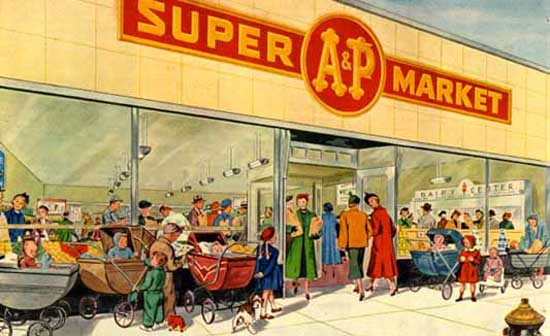
A&P Family store 1950's painting

Toys R Us isn’t a story about Amazon, or eCommerce, taking out another retailer

A&P Family store 1950's painting

The important part of the Toys R Us story is realizing that the wrong financial decisions can doom your organization.  You can have a great vision, and even great ideas about new ways to compete.  But if you don’t have the money to invest in growth, it won’t happen.  If leaders don’t have the money to spend on new projects and new markets, because they’re sending it all to bondholders or using it to  repurchase shares in hopes of propping up a stock price, eventually there will be a market shift that will doom the old business model and leave it unable to compete.

To succeed today leaders need the money to invest in change, and they have to constantly invest it in change, or their companies will lose relevancy and end up like Toys R Us, Radio Shack, Circuit City, Aeropostale, The Limited, Payless Shoes, Gander Mountain, Golfsmith, Sports Authority, Borders Books and the great, original American retailer A&P.

I'd like to receive newsletters.


The Case For Trian’s Nelson Peltz Joining P&G’s Board

The Case For Trian’s Nelson Peltz Joining P&G’s Board

Months ago Trian’s Nelson Peltz began buying Procter & Gamble (P&G) shares.  He invested about $3.5 billion, making Trian’s ownership 1.5%.  Since then he has been lobbying, unsuccessfully, for a seat on P&G’s board of directors.  He has said that although P&G already has 10 outside directors on its 11 member board, adding him would make a tremendous difference increasing P&G’s market valuation.  P&G is now the largest company ever to engage in a proxy battle between the existing board and an outside investor.

Today, Peltz offered his plan to change P&G, continuing his attack on management, saying that P&G has not sufficiently cut costs, nor has it created growth via innovation – citing no new innovation platform since Swiffer was introduced almost 20 years ago.  He attacked the company for selling off brands without returning sufficient funds to shareholders.  He believes management’s targets are too low, and it is too easy for managers to make their bonus.  He also believes there is a need to hire more managers from outside the company.

He informed the company if he were a director he would reorganize the company to make it more streamlined, change the compensation plan, and do a better job of cutting costs.

P&G is dead set against adding Peltz, saying he would disrupt the board, and the company, in negative ways. CNBC.com reported Peltz’ claims the company is spending $100 million on the proxy fight to keep him off the board. P&G’s proxy statement puts that sum at $35 million.  Either number indicates P&G is spending a lot of money to stop the appointment of Peltz.

Nelson Peltz, Trian Partners

Nelson Peltz, Founder Trian Partners, LLC

The company defended itself, saying leadership has been growing EPS (earnings per share,) making productivity improvements, growing sales organically at 2%/year and returning huge value to shareholders.  They accuse Peltz of simply planning a split of the company into 3 parts so each can go public on its own – adding little value to shareholders while damaging the company’s ability to operate.

Unfortunately, P&G’s leadership has pretty much set itself up for this battle.  And shareholders may have good reason to add Peltz to the board in hopes of additional change.

P&G’s financial performance has been poor

Firstly, in the last 10 years the value of P&G has risen about 44%. But the S&P 500 has grown by 154.5%.  Shareholders would have done better owning the average than owning P&G.  Claims about how well P&G have done since the CEO arrived 2 years ago overlook the fact that just prior to his arrival, in November, 2014 P&G shares traded at $90-$93.85/share, which is just about where they are now.  So all that’s happened is a recovery to where things were previously, not a great success.  Shareholders have a right to be frustrated.

EPS has risen, but that has everything to do with share buybacks rather than earnings growth.  EPS has risen about 11%.  But since 2nd quarter of 2007 P&G has spent ~$61billion on share repurchases, reducing the number of shares from 3.32 billion to 2.74 billion, or 17.5%.  Rather than growing earnings, leadership has been making the capital structure smaller – and thus EPS has risen while earnings have not.  This is actually a program that goes all the way back to 1995, which indicates a long-term approach of focusing on EPS, which are manipulated, rather than earnings.

P&G has favored divestitures and share repurchases over innovation and acquisitions for growth

Meanwhile, P&G’s buyback program has been financed by a dramatic divestiture program, selling off very large businesses to raise cash.  Over the last decade major sales included:

2009 – selling the P&G pharma business
2012 – selling the water filtration business including Pur
2012 – selling Pringles (along with several other iconic brands)
2014 – selling the dog food business
2016 – selling the Duracell battery business
2016 – selling the beauty brand business

Management tried in its response to say that innovation was just fine at P&G.  But what it cited were line extensions like Tide PODs, GAIN Flings, Pampers Pants, and Oral B power toothbrush.  None of these are great new innovations launching significant sales.  None are new product platforms for high growth.  Rather they are typical sustaining innovations applied to brands that are long in the tooth.

This is typical of the long-term lack of valuable innovation at P&G. Do you recall in 2009 when the company lauded its development of the “P&G Public Toilet Database App?” Not exactly on the top 20 iTunes list.  Or do you remember in 2014 when P&G launched its “Basic” line of products, where it literally sold a less-good quality product hoping to attract a brand-conscious but quality uncaring targeted niche?  Peltz is making a good point, that leadership at P&G really has forgotten what good, long-term profit producing innovation is, while succumbing to the strategy of selling major business units (reducing revenue) then using the money to buy back shares rather than investing in future growth.

P&G has not shown it understands how trends are quickly changing its business

Meanwhile, the consumer goods industry is changing dramatically, and it is not clear that P&G’s leadership is really preparing for future changes.  P&G still relies heavily on television advertising to sell its products. But that approach had stopped generating profitable growth as far back as 2010. Back then Colgate was holding its market share, and growing revenues, on all its brands that compete with P&G while spending 25% less, and often much less, on advertising.


P&G is still stuck using marketing strategies that have been outdated for almost a decade. Comcast lost 90,000 subscribers in Q2, and the stock lost 7% today when Comcast management alerted investors it expects to lose 150,000 more in Q3.  And while viewership is declining, ad pricing is going up, making TV advertising a less effective and more expensive marketing tactic for consumer goods. As P&G brands have fallen further behind competitors in Instagram followers, and lack good social media programs like Wendy’s, Peltz has proposed a substantial increase in digitally savvy marketers.

P&G and Walmart logo

Simultaneously, distribution is changing dramatically.  Once P&G could rely on its product dominance to dictate space usage in grocery stores and discounters.  But the rise of e-commerce has dramatically affected these historical distribution channels.  Today the fastest growing grocer is Aldi, which eschews brands like P&G’s in favor of its own private label.  And after stunting the growth of discounters like WalMart, the leading e-commerce company, Amazon.com, has now purchased Whole Foods.  This is leading everyone to expect greater growth in on-line grocery shopping and additional at-home delivery, which undercuts the former strength P&G had in traditional brick-and-mortar stores with warehouse delivery models.

Management bragged of its $3 billion in e-commerce sales, but that is a drop in the bucket.  Is P&G ready to compete for sales in future markets where social media is more important than advertising?  Where mobile ads have more power than print, TV, radio and traditional internet banners?  Where social media groups drive more consumption behavior than company-sponsored social media pages with coupons and use recommendations?  Will P&G dominate product volume when it has to rely on Amazon.com and other sites to sell and deliver its products?  If people move to daily home deliveries, and less stock-up purchasing what will happen to P&G’s former brand advantage via high numbers of SKUs (stock keeping units) and large packaging options?

This will be an interesting proxy battle.  There is no doubt Peltz wants to shake up the board’s behavior, compensation plans, hiring programs, targets and many of the ways management runs the company.  Simultaneously, the P&G board believes it is moving in the right direction.  Large shareholders are conservative, and don’t like to create problems (P&G’s largest shareholders are Vanguard, Blackrock, State Street, BofA, Capital World, Trian, Northern Trust – which combined control 24% of P&G stock.)

But this isn’t about a complete change in the board.  It’s just a vote to add one additional member who is not happy with things the way they are.  Will these large shareholders see a need for someone to shake things up, or will they accept current leadership’s claims that things are on the right track?

It will be interesting to watch, because Peltz isn’t without some objective concerns about P&G’s future, given its performance the last decade and the amount of change facing the industry.